
How a Zoning Amendment Becomes Law: The Official Timeline
A plain-language, step-by-step look at the procedure Narberth Borough Council must follow under Pennsylvania law to adopt a zoning amendment.
Aongus Flood
Narberth zoning changeszoning processBorough CouncilMPC
517 |2 Minutes, 21 Seconds
2026-08-04 20:00 -0400
Before Borough Council can adopt a zoning amendment, Pennsylvania law requires it to follow a set procedure. The Municipalities Planning Code (MPC) lays out who must review the amendment, how the public must be notified, and what has to happen before a vote can be taken. None of this is unique to Narberth. Every Pennsylvania municipality follows the same basic sequence.
This piece sets out that sequence step by step, without getting into what happens after a vote. It’s meant as a reference: what stage the process is at, what’s supposed to happen next, and roughly when.
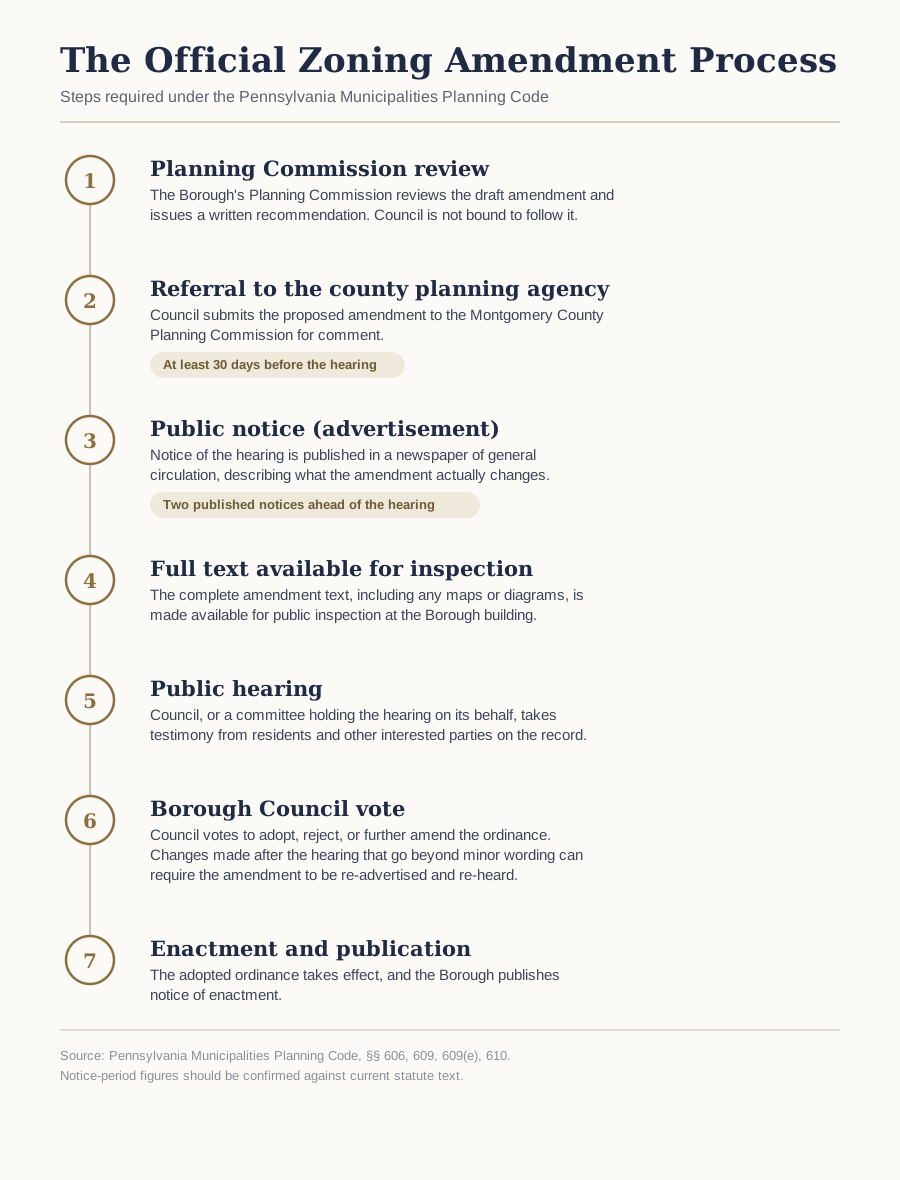
The official sequence, from first review to enactment.
1. Planning Commission review
The Narberth Planning Commission reviews the draft amendment first and produces a written recommendation. This step happens before Council takes any formal action. The recommendation is advisory. Council can adopt it, modify it, or depart from it, but the Commission has to have had the chance to weigh in.
2. Referral to the county planning agency
Council must submit the proposed amendment to the Montgomery County Planning Commission at least 30 days before the public hearing. The county reviews the amendment and can respond with comments, though it has no power to block a local amendment. This step exists so that a municipality’s zoning decisions get at least one outside look before they’re finalized.
3. Public notice (advertisement)
Notice of the public hearing must be published in a newspaper of general circulation. The notice has to describe what the amendment actually does, not just that a zoning hearing is happening. This is typically two published notices ahead of the hearing date. The exact spacing between publication and the hearing is set by statute; readers who need the precise figure for their own purposes should confirm it against the current MPC text rather than relying on a summary.
4. Full text available for public inspection
The complete text of the amendment, including any maps, tables, or diagrams that go with it, must be available for public inspection before the hearing. In practice, this means a copy at the Borough building, in addition to whatever the Borough posts online.
5. Public hearing
Council, or a committee designated to hold the hearing on Council’s behalf, takes public testimony. This is the formal opportunity for residents and other interested parties to comment on the record before a vote is taken.
6. Borough Council vote
After the hearing, Council votes to adopt, reject, or further amend the ordinance. If Council makes substantial changes to the draft after the hearing, that can trigger a requirement to re-advertise and hold a new hearing before final adoption. Minor wording fixes don’t trigger this; changes that meaningfully expand what’s newly permitted are more likely to.
7. Enactment and publication
Once adopted, the ordinance takes effect and the Borough publishes notice of enactment.
This is a plain-language summary of the general procedure under the Pennsylvania Municipalities Planning Code, not legal advice. Section numbers and notice-period figures should be verified against the current statute text or confirmed with the Borough Solicitor before being relied on for any formal purpose.